
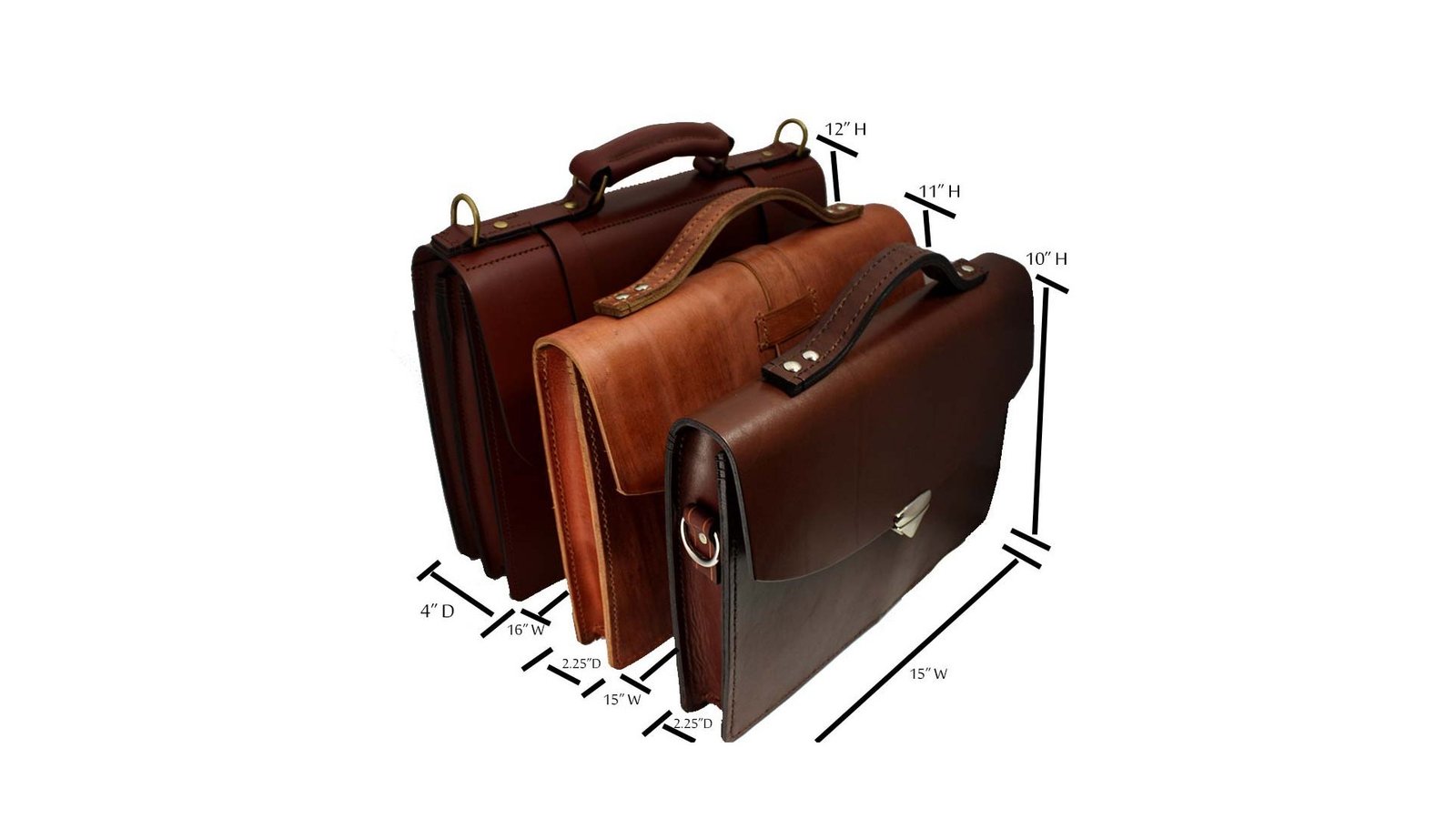
The number on the box describes the screen, not the machine. Apple lists the 16-inch MacBook Pro at 14.01 inches wide, 9.77 inches deep and 0.66 inch thick, weighing 4.7 pounds, while the 14-inch model comes in at 12.31 by 8.71 inches. A briefcase sold as “fits 16-inch laptops” has to clear those figures with room left over for a charger, a notebook and the leather itself. Most don’t.
Marcellino NY Briefcase Maker on YouTube: designing a thin portfolio for a MacBook Air.

The footprint comes first
Width decides most purchases. A 16-inch machine needs just over fourteen inches of clear interior across, and a case listed at sixteen inches does not give sixteen inside. Seams take a share. So do the folds at each end, and a lining adds a layer on both sides. I cut bridle thick enough to hold a shape without help, which is exactly why its outside dimensions overstate the room in the middle.
Depth is the second check. At 9.77 inches the laptop sits comfortably in a case twelve inches tall, until a rolled flap, a stiffened top edge or a pocket sewn across the front eats into that. Height matters less than people expect. Thickness matters least, since the machine is under three quarters of an inch.
A tape measure settles it in a minute. Measure the inside along the opening, seam to seam, then the depth from the bottom fold to the lip, and compare both to the maker’s published laptop dimensions rather than the screen size.
What other makers publish
Published specifications show how far the stated numbers can drift from what a person carries. WaterField Designs, a San Francisco bag maker, introduced a leather briefcase in 2019 measuring 16 by 11.25 by 4 inches with a padded compartment for a 16-inch MacBook Pro. A newer model, the Lexington Leather Brief, lists a padded sleeve for laptops up to 16 inches and a tablet sleeve for up to a 13-inch iPad Pro, priced at $579 at launch.
Both are sleeve designs. The laptop lives in a padded pocket cut to fit it, which solves the fit problem head on and adds weight and bulk.
Frank Clegg’s Zip-Top briefcase goes the other way. A reviewer at Stridewise measured it at 17 by 12 by 4 inches and 4 pounds 3 ounces, then noted two compartments and no laptop sleeve, so a laptop can bounce around if it isn’t secured. Big and fitted are two different things.
My own cases are a different format again. My Hermann Oak harness portfolio runs 16 by 12 inches with a two-inch gusset, and my single-section briefcases carry three-inch gussets. A 14-inch laptop clears those dimensions with room to spare. A 16-inch machine fits, but only if I measure first and keep the sleeve slim.

Gusset and padding
The gusset is the side panel that gives a briefcase its depth. Two inches holds a laptop and a folder. Three holds a laptop, a charger, a book and lunch. At four it starts to feel like luggage.
Padding is what buyers forget. A neoprene or felt sleeve adds roughly a quarter inch on each face, and that matters in a case with only half an inch of slack. Leather protects against scratches, not drops. Structure does more than softness here: a bridle case with a stiff bottom absorbs a bump that would travel straight through an unstructured bag. I cut gussets thinner than the panels so the case bends without creasing the outside, and the bridle leather vs. vegetable-tanned comparison explains why the firmer material behaves the way it does.
Size questions that go beyond laptops, such as legal pads, folders and travel, are in the guide on how to choose the right size briefcase.
Weight on the shoulder
The machine itself weighs 4.7 pounds, which Apple lists for the M5 Pro and M5 Max configurations. Add a power adapter, a notebook and a water bottle and the load approaches ten pounds. A briefcase that weighs four pounds empty puts fourteen on one shoulder.
Weight is a design decision. In my video on heavy and light bridle briefcases I go through three ways to cut it: thinner bridle with a suede lining, American bridle skived thin around a cardboard barrier, or thicker full-grain leather for the long haul. I lean toward the last one, with no cardboard. It weighs more and it lasts longer.
A flat, thin portfolio sits at the other end of the range, and the video above shows one I designed for a MacBook Air. A 16-inch machine works in a portfolio only if the interior is cut generously across the width.

A short test before paying
- Measure the interior width seam to seam and compare it to 14.01 inches for a 16-inch laptop.
- Measure the interior depth and compare it to 9.77 inches.
- Add the charger, a notebook and any sleeve planned for daily use, and check the gusset against the stack.
- Ask whether the opening closes with the laptop inside, since a flap that has to stretch will crease at the corners.
- Weigh the empty case, then add 4.7 pounds for the machine.
A briefcase that passes those five checks will carry the machine for years. One that fails any of them wears at the corners, strains the closure and pulls on the shoulder strap until something gives.
Sources
- Apple, MacBook Pro technical specifications
- WaterField Designs, Executive Leather Laptop Briefcase announcement (PRWeb, 2019)
- Fashion Mannuscript, WaterField Lexington Leather Brief (2026)
- Stridewise, Frank Clegg briefcase review
- Marcellino NY Briefcase Maker: thin portfolio for a MacBook Air
- Marcellino NY Briefcase Maker: heavy and light weight English bridle briefcases
- Marcellino NY Briefcase Maker: Hermann Oak harness portfolio, 16 x 12


