
Two bags can both say American on the tag and have almost nothing in common. One may be cut, stitched and finished in a New York workshop from leather tanned in Missouri. Another may be sewn in a US factory from imported panels and hardware. The Federal Trade Commission has a standard for the first kind of claim, and different wording for the second.
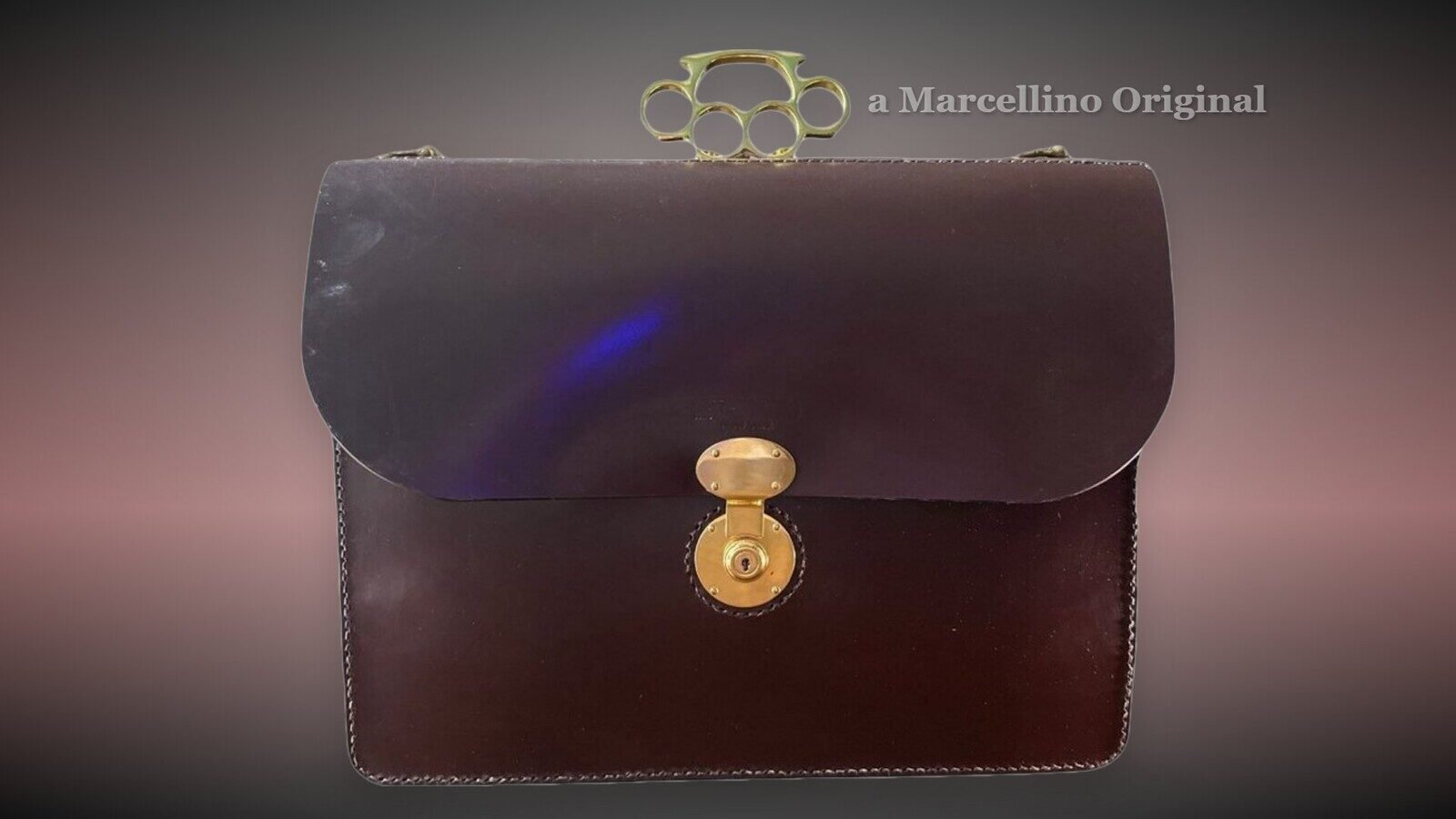
Marcellino NY Briefcase Maker on YouTube: a bulletproof bridle leather briefcase.

No law requires the label
The FTC’s guidance begins with a fact that surprises many shoppers: no law requires most products sold in the United States to carry a Made in USA label. A company that chooses to make a US-origin claim has to follow the FTC’s rules, and those cover express claims such as the words Made in USA and implied claims, including those suggested by flags, maps or references to a US factory.
The Commission does not approve claims in advance. Any claim must be truthful and substantiated. An American brand name alone is generally not an origin claim.
“All or virtually all”
An unqualified claim has a high bar. The FTC says the product must be made “all or virtually all” in the United States, a term that covers the fifty states, the District of Columbia and US territories.
In practice that means final assembly or processing happens in the US, significant processing happens there, and nearly all components are made and sourced domestically, with negligible foreign content. The agency weighs the share of manufacturing costs that comes from US parts and processing, how far foreign content sits from the finished product, and how essential that content is to the product’s form or function. Cost alone is not decisive.
Raw materials get their own treatment. The FTC assesses them by cost share and by how far removed they are from the finished product. Its guidance contrasts an imported gold component, which makes an unqualified claim deceptive, with an imported plastic input that is distant and minor.
For a leather bag the questions follow naturally. Where was the hide tanned? Where were the panels cut? Where was the hardware made, and where was the bag assembled? The FTC gives no leather-specific ruling in that guidance, and I’m not implying one.

Qualified claims
Companies that fall short of the standard can still describe their product accurately. A qualified claim discloses the extent or type of US content, by giving a percentage of US content or stating that the product combines US and imported parts. The guidance adds a limit: qualified claims suit products with significant US content or processing, and a US-and-imported-parts claim is deceptive when the US parts are negligible.
Process claims have rules too. A claim about a specific process or part must refer to that process or part, and broad wording about manufacturing in the US can imply more domestic content than exists. An unqualified assembled-in-USA claim suits only products where the principal, substantial assembly takes place in the US and the final substantial transformation happens there. Simple screwdriver assembly usually does not qualify.
Customs is a separate matter
Imported goods follow different rules. Customs and Border Protection requires imported goods to carry a foreign country-of-origin mark, based on the last substantial transformation. The FTC states that meeting the Customs marking requirement does not automatically permit a Made in USA claim, because the FTC applies its own standard.

The labeling rule and penalties
The FTC’s Made in USA Labeling Rule was finalized in August 2021 and appears at 16 C.F.R. Part 323. It covers labels on products making unqualified claims, along with online and mail-order materials that show a Made in USA seal, mark, tag or stamp. The Commission says marketers face civil penalties for using an unqualified label on products that are not all or virtually all made in the US, including in catalogs and online. A competitor or other damaged party may also sue under the Lanham Act for a false designation of origin.
How makers word it
Reading the wording real makers use shows the range:
- WaterField Designs, in a 2019 press release, described its briefcase as manufactured entirely in San Francisco.
- A retailer lists Frank Clegg briefcases as handcrafted in Massachusetts, while a trade review reports that the maker uses French hides.
- Tanneries such as Hermann Oak in St. Louis and Wickett & Craig in Pennsylvania describe the leather’s origin, which a bag label may or may not mention.
Wording like handcrafted in a state describes a place. On its own it does not say where the leather came from, and the FTC’s framework treats those as separate questions. I’m not assessing any maker’s compliance here, mine included.
My roundup of American-made leather briefcases goes through the origin question maker by maker.
Questions that settle it
- Where was the leather tanned, and is the tannery named?
- Where were the panels cut and the bag assembled?
- Where was the hardware made?
- Does the label say “Made in USA,” “Assembled in USA,” or a qualified version?
- Does the seller state the percentage of US content?
A maker who can answer all five usually does it on the product page.
Sources
- Federal Trade Commission, Complying with the Made in USA Standard
- PRWeb, WaterField Executive Leather Laptop Briefcase
- The Armoury, Frank Clegg Zip-Top briefcase
- Stridewise, Frank Clegg leather selection
- Leather Naturally, Hermann Oak Leather
- Leather Magazine, Wickett & Craig
- Marcellino NY Briefcase Maker, bulletproof bridle leather briefcase


